Why Gardnerville, Minden and Genoa Price So Differently in the Same Valley
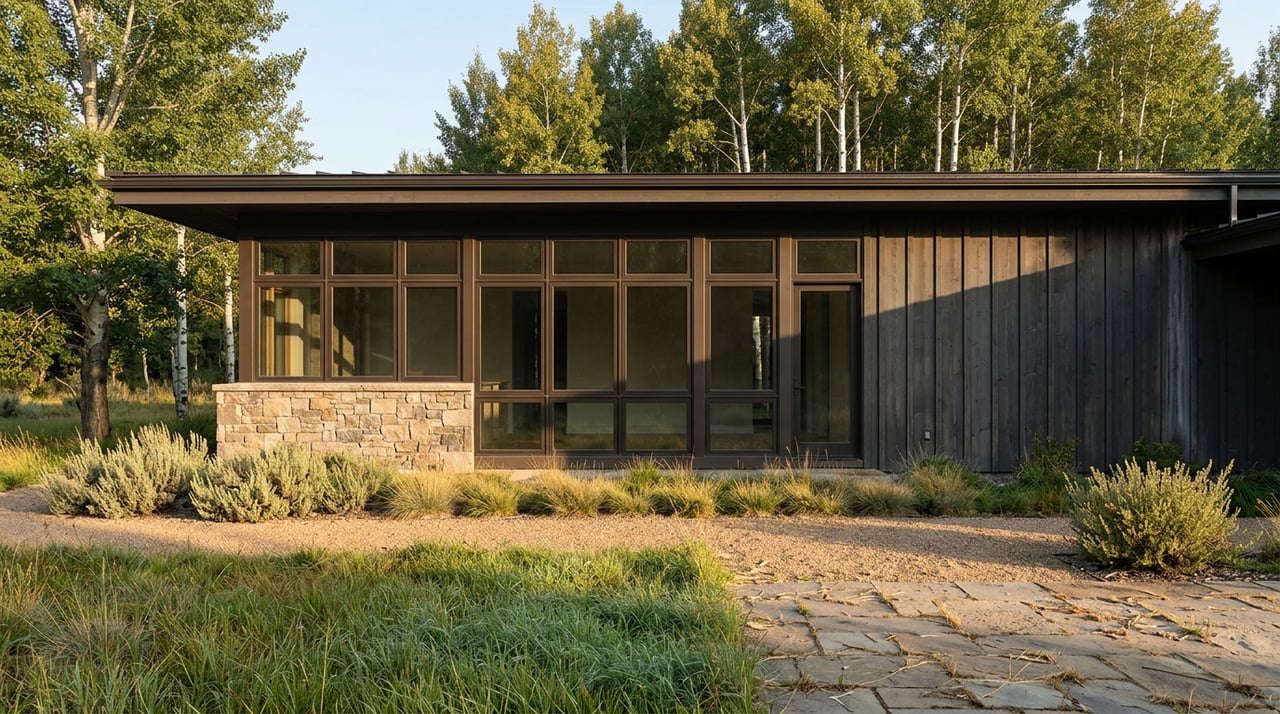
A home in Genoa's golf-course neighborhoods typically sits on the market for around 115 days. A home in Gardnerville, a short drive south along Highway 395, usually sells in 60 to 71. That should mean Gardnerville is the hotter market. It isn't. Genoa's median asking price in its golf-course segment runs near $1.48 million. Gardnerville's countywide median for the first half of 2026 landed closer to $552,500.
Slower and more expensive at the same time is not how most housing markets behave. Usually speed and price move together: hot markets sell fast and cost more, cool markets sell slow and cost less. Carson Valley breaks that rule inside a single Nevada county, across three towns you can drive between in under fifteen minutes. Understanding why is more useful to a Carson Valley buyer in 2026 than any single median price pulled off a portal.
Douglas County real estate agents and the Northern Nevada Regional MLS track Gardnerville, Minden and Genoa as one market because geographically they are. Route 206 and Highway 395 string them together along the eastern base of the Sierra. But the first-half 2026 numbers show three markets running on different clocks, not one market with a price gradient.
| Town | H1 2026 median sale price | What's actually driving it |
|---|---|---|
| Gardnerville | about $552,500 | rate-sensitive entry and mid-tier stock, inventory at a five-year high |
| Minden | about $699,450 | equity-funded move-up buyers keeping pricing steady |
| Genoa | about $1,319,950 | a town that can barely add supply, drawing cash-heavy trophy buyers |
The gap between Gardnerville and Genoa is not a lot-size story alone. It is a supply-mechanics story, and each town's mechanism is different enough that comparing them on one median obscures more than it reveals.
Genoa is Nevada's oldest town, settled in 1851 as a trading post on the California Trail. Its historic core, listed on the National Register of Historic Places in 1975, covers just 129.5 acres. Douglas County created the Genoa Historic District Commission in 1974 specifically to protect that designation, and any exterior change to a building in the district's Neighborhood Commercial zoning that's visible from the street requires a Certificate of Appropriateness from that commission before work can begin.
That review process only touches commercial-zoned exteriors, not every residential lot in town. But it sits on top of a town that lost its own county seat to Minden in 1916 and never grew back into a development pipeline the way its neighbors did. What growth Genoa has seen came almost entirely through purpose-built golf communities like Genoa Lakes, which combines the Resort and Lakes courses into roughly 350 to 400 custom and semi-custom homes total. That is the entire supply. When 2024 wrapped up, the two golf courses themselves changed hands for $8.95 million, a decade after the sellers had purchased them for $3.25 million, a sign of how much capital keeps circulating through a very small footprint of land.
A town with a fixed 129.5-acre historic core and a golf community capped near 400 homes cannot respond to demand the way Gardnerville can. Prices in Genoa move on scarcity, not on rate cycles. That is why days on market can stretch past 100 while the price tag climbs past a million: buyers there are not shopping the market, they are waiting for one of a genuinely limited set of properties to come open.
Genoa is also still home to Nevada's oldest continuously operating bar, open since 1853, and the annual Candy Dance festival that residents have run since 1919 to fund the town's street lights. None of that shows up in a median price. All of it is part of why buyers pay a premium for a very small number of available homes.
Minden sits between the two extremes, and its H1 2026 median near $699,450 reflects that position more than any lifestyle distinction. Minden became the Douglas County seat in 1916 after the courthouse transfer from Genoa, and it has built out steadily since as the valley's administrative and commercial anchor.
The buyers active in Minden right now skew toward move-up households with existing equity, not first-time buyers stretching on a rate-locked budget. That keeps Minden's pricing firmer than Gardnerville's even as national mortgage rates sit in the mid-6% range. It is not immune to rate pressure the way Genoa's cash-heavy buyers are, but it is more insulated than Gardnerville's entry tier because the buyers writing offers there are less dependent on financing terms to make the math work.
Gardnerville is the largest of the three towns and the one where national mortgage-rate headlines translate directly into local behavior. Inventory there has climbed to a five-year high, and buyers have regained real negotiating leverage on price, repairs and closing-cost credits, a shift from the seller-driven conditions of the past several years.
That leverage did not stop transactions. Douglas County home sales in June 2026 jumped 50 percent over May and were up 36.4 percent from June 2025, according to the Sierra Nevada Realtors Existing Home Sales Report. Ken Lund, a broker-salesperson with a south Reno firm, told the paper the market has been "surprisingly robust" given how hostile the rate environment has felt this year, noting mortgage rates stood at 6.49 percent in June, up from a yearly low of 6.01 percent in mid-February. Lund also flagged that buyer concessions, credits used to buy down rates or cover closing costs, are becoming more common even though they are not a formally tracked data point.
Put together, that is not a contradiction. It is what a large, elastic entry tier looks like when affordability improves even slightly: more transactions and more negotiating room at the same time, because there is enough supply for both to be true.
One number cuts across Gardnerville, Minden and Genoa in the same direction: Nevada has no state income tax, and Douglas County's effective property-tax rate runs near 0.6 percent, among the lowest carrying costs in the West. That number matters differently depending on which of the three markets you're buying into.
On a $552,500 Gardnerville home, a 0.6 percent effective rate works out to roughly $3,300 a year in property tax, a real but modest addition to a monthly payment already sensitive to rate movement. On a $1.3 million Genoa property, the same rate produces close to $7,900 a year, a smaller percentage of the purchase but a bigger absolute number that cash-heavy buyers in that segment are typically weighing against what they'd pay in California or elsewhere. The tax advantage is real in all three towns. What it offsets, and how much it matters to the buyer writing the offer, is not the same conversation in Gardnerville as it is in Genoa.
A few things follow directly from the mechanics above, not from a blended county median:
Does the "Carson Valley median price" mean anything useful? Not much on its own. Blending Gardnerville's entry-tier volume with Genoa's thin, high-dollar segment produces a number that describes neither town accurately. Town-level data is the only version worth acting on.
Which town has the most negotiating room right now? Based on H1 2026 conditions, Gardnerville. Inventory sits at a five-year high there, and rising sales volume alongside that inventory suggests buyers can move quickly without giving up leverage on terms.
Does Genoa's historic district restrict every home in town? No. The Genoa Historic District Commission's review applies specifically to exterior changes on Neighborhood Commercial zoned properties visible from the street. Most residential neighborhoods, including golf communities like Genoa Lakes, are governed by their own HOA architectural standards rather than the county commission.
Carson Valley rewards buyers who know which of its three towns they're actually comparing before they compare prices. If you're weighing Gardnerville's inventory, Minden's stability or Genoa's scarcity against your own timeline and budget, Tahoe Truckee Real Estate Group can walk through what each town's current conditions mean for your specific search. Schedule a free strategy session and we'll get into the numbers that actually apply to you.
This article is general information, not legal, tax or financial advice. Consult a qualified professional about your situation.
We are a renowned real estate team dedicated to providing exceptional service and unparalleled excellence in representing Lake Tahoe properties. Our foundation is built on expertise, unwavering commitment, and a focus on client satisfaction.